
Graniet is 'n tipe stollingsgesteente wat ontgin word vir sy uiterste sterkte, digtheid, duursaamheid en weerstand teen korrosie. Maar graniet is ook baie veelsydig – dit is nie net vir vierkante en reghoeke nie! Trouens, ons werk met selfvertroue gereeld met granietkomponente wat in vorms, hoeke en kurwes van alle variasies vervaardig is – met uitstekende resultate.
Through our state of the art processing, cut surfaces can be exceptionally flat. These qualities make granite the ideal material to create custom-size and custom-design machine bases and metrology components. Granite is:
■ masjineerbaar
■ presies plat wanneer gesny en afgewerk
■ roesbestand
■ duursaam
■ langdurig
Granietkomponente is ook maklik om skoon te maak. Wanneer jy persoonlike ontwerpe skep, maak seker dat jy graniet kies vir sy uitstekende voordele.
STANDAARDE / HOË SLYTASIE-TOEPASSINGS
Die graniet wat deur ZHHIMG vir ons standaard oppervlakplaatprodukte gebruik word, het 'n hoë kwartsinhoud, wat groter weerstand teen slytasie en skade bied. Ons Superior Black-kleure het lae waterabsorpsietempo's, wat die moontlikheid dat jou presisiemeters roes terwyl dit op die plate vassit, verminder. Die kleure van graniet wat deur ZHHIMG aangebied word, lei tot minder glans, wat minder oogspanning beteken vir individue wat die plate gebruik. Ons het ons graniettipes gekies met inagneming van termiese uitbreiding in 'n poging om hierdie aspek minimaal te hou.
CUSTOM APPLICATIONS
Wanneer jou toepassing 'n plaat met persoonlike vorms, skroefdraadinsette, gleuwe of ander bewerking vereis, sal jy 'n materiaal soos Black Jinan Black wil kies. Hierdie natuurlike materiaal bied superieure styfheid, uitstekende vibrasiedemping en verbeterde bewerkbaarheid.
Dit is belangrik om daarop te let dat kleur alleen nie 'n aanduiding is van die fisiese eienskappe van die klip nie. Oor die algemeen hou graniet se kleur direk verband met die teenwoordigheid of afwesigheid van minerale, wat moontlik geen invloed het op die eienskappe wat goeie oppervlakplaatmateriaal maak nie. Daar is pienk, grys en swart graniete wat uitstekend is vir oppervlakplate, sowel as swart, grys en pienk graniete wat heeltemal ongeskik is vir presisietoepassings. Die kritieke eienskappe van graniet, soos dit betrekking het op die gebruik daarvan as 'n oppervlakplaatmateriaal, het niks met kleur te doen nie en is soos volg:
■ Styfheid (defleksie onder las - aangedui deur Elastisiteitsmodulus)
■ Hardheid
■ Digtheid
■ Slytvastheid
■ Stabiliteit
■ Porositeit
Ons het baie granietmateriale getoets en vergelyk. Uiteindelik kry ons die resultaat: Jinan swart graniet is die beste materiaal wat ons nog ooit geken het. Indiese swart graniet en Suid-Afrikaanse graniet is soortgelyk aan Jinan swart graniet, maar hul fisiese eienskappe is minderwaardig as dié van Jinan swart graniet. ZHHIMG sal aanhou soek na meer granietmateriaal in die wêreld en hul fisiese eienskappe vergelyk.
Om meer te praat oor die graniet wat reg is vir u projek, kontak ons assebliefinfo@zhhimg.com.
Verskillende vervaardigers gebruik verskillende standaarde. Daar is baie standaarde in die wêreld.
DIN-standaard, ASME B89.3.7-2013 of Federale Spesifikasie GGG-P-463c (Graniet-oppervlakplate) en so aan as basis vir hul spesifikasies.
En ons kan graniet-presisie-inspeksieplate vervaardig volgens u vereistes. Kontak ons gerus as u meer inligting oor meer standaarde wil weet.
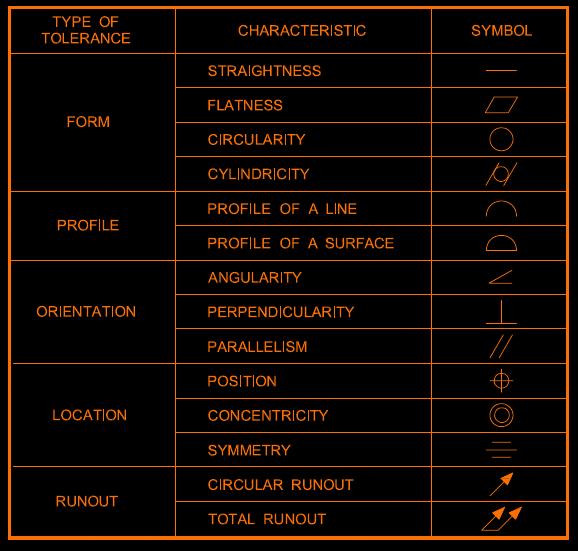
Platheid kan beskou word as alle punte op die oppervlak wat binne twee parallelle vlakke, die basisvlak en die dakvlak, voorkom. Die meting van die afstand tussen die vlakke is die algehele platheid van die oppervlak. Hierdie platheidmeting het gewoonlik 'n toleransie en kan 'n graadbenaming insluit.
Byvoorbeeld, die platheidstoleransies vir drie standaardgrade word in die federale spesifikasie gedefinieer soos bepaal deur die volgende formule:
■ Laboratoriumgraad AA = (40 + diagonaal kwadraat/25) x .000001" (eensydig)
■ Inspeksiegraad A = Laboratoriumgraad AA x 2
■ Gereedskapkamer Graad B = Laboratorium Graad AA x 4.
Vir standaardgrootte oppervlakplate waarborg ons platheidstoleransies wat die vereistes van hierdie spesifikasie oorskry. Benewens platheid, spreek ASME B89.3.7-2013 en Federale Spesifikasie GGG-P-463c onderwerpe aan soos: herhaalde metingsakkuraatheid, materiaaleienskappe van oppervlakplaatgraniete, oppervlakafwerking, ondersteuningspuntligging, styfheid, aanvaarbare inspeksiemetodes, installering van skroefdraadinsette, ens.
ZHHIMG granietoppervlakplate en granietinspeksieplate voldoen aan of oortref al die vereistes wat in hierdie spesifikasie uiteengesit word. Tans is daar geen definiërende spesifikasie vir graniethoekplate, parallelle of meestervierkante nie.
En jy kan die formules vir ander standaarde vind inLAAI AF.
Eerstens, dit is belangrik om die plaat skoon te hou. Luggedraagde skuurstof is gewoonlik die grootste bron van slytasie op 'n plaat, aangesien dit geneig is om in werkstukke en die kontakoppervlakke van meetinstrumente vas te sit. Tweedens, bedek jou plaat om dit teen stof en skade te beskerm. Die slytasieleeftyd kan verleng word deur die plaat te bedek wanneer dit nie gebruik word nie, deur die plaat periodiek te draai sodat 'n enkele area nie oormatige gebruik ontvang nie, en deur staalkontakblokkies op meetinstrumente met karbiedblokkies te vervang. Vermy ook om kos of koeldrank op die plaat te plaas. Let daarop dat baie koeldranke óf koolsuur óf fosforsuur bevat, wat die sagter minerale kan oplos en klein putjies in die oppervlak kan laat.
Dit hang af van hoe die bord gebruik word. Indien moontlik, beveel ons aan dat die bord aan die begin van die dag (of werkskof) en weer aan die einde skoongemaak word. Indien die bord vuil word, veral met olierige of taai vloeistowwe, moet dit waarskynlik onmiddellik skoongemaak word.
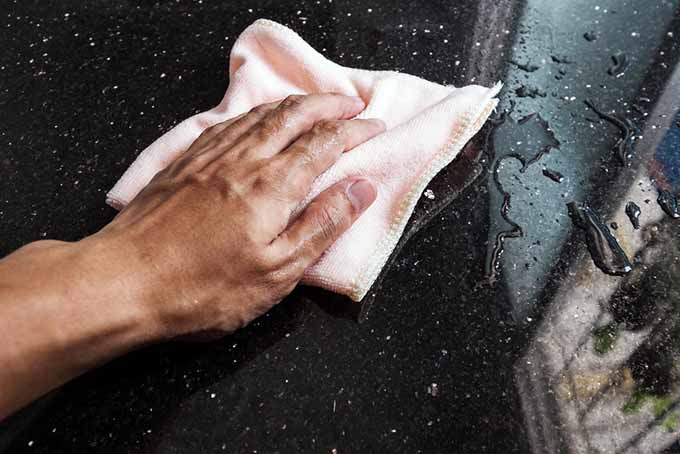
Maak die plaat gereeld skoon met vloeibare of waterlose ZHHIMG-oppervlakplaatskoonmaker. Die keuse van skoonmaakoplossings is belangrik. Indien 'n vlugtige oplosmiddel gebruik word (asetoon, lakverdunner, alkohol, ens.) sal die verdamping die oppervlak afkoel en vervorm. In hierdie geval is dit nodig om die plaat te laat normaliseer voordat dit gebruik word, anders sal meetfoute voorkom.
Die hoeveelheid tyd wat benodig word vir die plaat om te normaliseer, sal wissel na gelang van die grootte van die plaat en die hoeveelheid verkoeling. 'n Uur behoort voldoende te wees vir kleiner borde. Twee uur mag nodig wees vir groter borde. Indien 'n watergebaseerde skoonmaakmiddel gebruik word, sal daar ook 'n mate van verdampingsverkoeling wees.
Die plaat sal ook die water behou, en dit kan roes veroorsaak op metaalonderdele wat in kontak is met die oppervlak. Sommige skoonmaakmiddels sal ook 'n klewerige residu agterlaat nadat hulle droog is, wat lugstof sal aantrek en eintlik slytasie sal verhoog, eerder as om dit te verminder.
Dit hang af van die plaatgebruik en omgewing. Ons beveel aan dat 'n nuwe plaat of presisie-granietbykomstigheid binne een jaar na aankoop 'n volledige herkalibrasie ondergaan. Indien die granietoppervlakplaat swaar gebruik gaan word, kan dit raadsaam wees om hierdie interval tot ses maande te verkort. Maandelikse inspeksie vir herhaalde meetfoute met behulp van 'n elektroniese waterpas of soortgelyke toestel sal enige ontwikkelende slytasiekolle toon en neem slegs 'n paar minute om uit te voer. Nadat die resultate van die eerste herkalibrasie bepaal is, kan die kalibrasie-interval verleng of verkort word soos toegelaat of vereis deur u interne kwaliteitstelsel.
Ons kan diens aanbied om u te help om u granietoppervlakplaat te inspekteer en te kalibreer.

Daar is verskeie moontlike oorsake vir variasies tussen kalibrasies:
- Die oppervlak is voor kalibrasie met 'n warm of koue oplossing gewas, en is nie genoeg tyd gegee om te normaliseer nie.
- Die plaat word nie behoorlik ondersteun nie
- Temperatuurverandering
- Konsepte
- Direkte sonlig of ander stralingshitte op die oppervlak van die plaat. Maak seker dat oorhoofse beligting nie die oppervlak verhit nie.
- Variasies in die vertikale temperatuurgradiënt tussen winter en somer (Indien moontlik, weet die vertikale gradiënttemperatuur ten tyde van die kalibrasie.)
- Plaat nie genoeg tyd gegee om te normaliseer na versending nie
- Onbehoorlike gebruik van inspeksietoerusting of gebruik van nie-gekalibreerde toerusting
- Oppervlakverandering as gevolg van slytasie
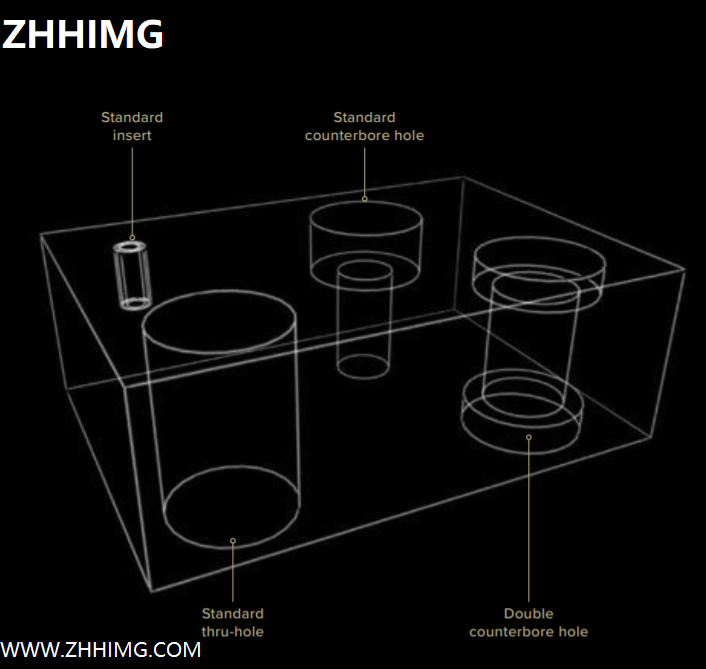
Hoeveel soorte gate op presisie graniet?
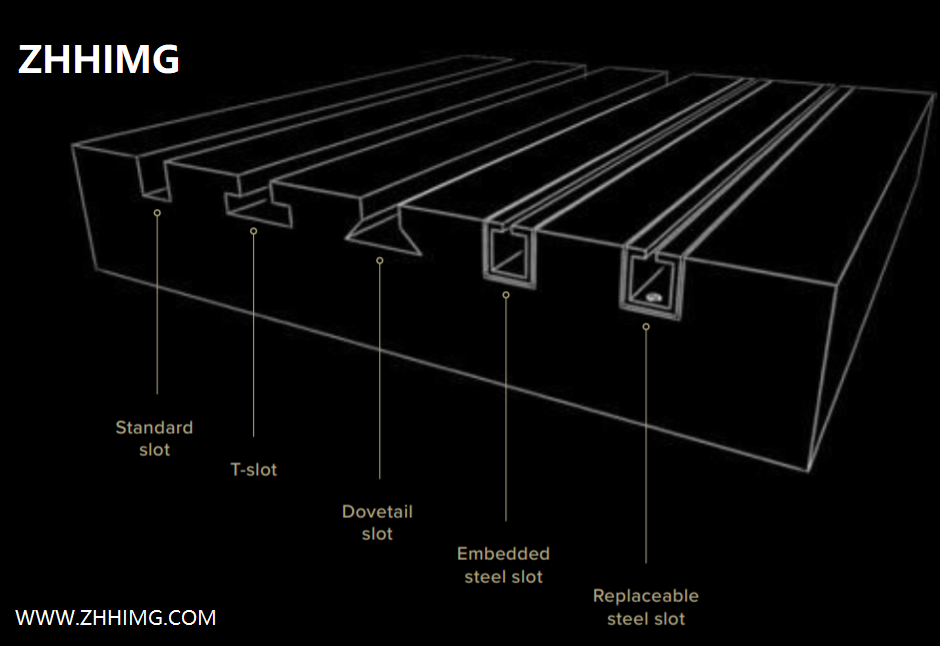
Gleuwe op Presisie Graniet Komponente
Vir baie fabrieke, inspeksiekamers en laboratoriums word presisie-graniet-oppervlakplate as basis vir akkurate meting gebruik. Omdat elke lineêre meting afhang van 'n akkurate verwysingsoppervlak waaruit finale afmetings geneem word, bied oppervlakplate die beste verwysingsvlak vir werkinspeksie en uitleg voor bewerking. Hulle is ook ideale basisse vir die maak van hoogtemetings en die meet van oppervlaktes. Verder maak 'n hoë mate van platheid, stabiliteit, algehele gehalte en vakmanskap hulle 'n goeie keuse vir die montering van gesofistikeerde meganiese, elektroniese en optiese meetstelsels. Vir enige van hierdie meetprosesse is dit noodsaaklik om oppervlakplate gekalibreer te hou.
Repeat Measurements and Flatness
Beide platheid en herhaalde metings is van kritieke belang om 'n presisie-oppervlak te verseker. Platheid kan beskou word as alle punte op die oppervlak wat binne twee parallelle vlakke, die basisvlak en die dakvlak, voorkom. Die meting van die afstand tussen die vlakke is die algehele platheid van die oppervlak. Hierdie platheidmeting het gewoonlik 'n toleransie en kan 'n graadbenaming insluit.
The flatness tolerances for three standard grades are defined in the federal specification as determined by the following formula:
DIN-standaard, GB-standaard, ASME-standaard, JJS-standaard ... verskillende lande met verskillende standpunte ...
Meer besonderhede oor die standaard.
In addition to flatness, repeatability must be ensured. A repeat measurement is a measurement of local flatness areas. It is a measurement taken anywhere on the surface of a plate that will repeat within the stated tolerance. Controlling local area flatness to a tighter tolerance than overall flatness guarantees a gradual change in surface flatness profile, thereby minimizing local errors.
Om te verseker dat 'n oppervlakplaat aan beide die spesifikasies vir platheid en herhaalde meting voldoen, moet vervaardigers van granietoppervlakplate die Federale Spesifikasie GGG-P-463c as basis vir hul spesifikasies gebruik. Hierdie standaard spreek die akkuraatheid van herhaalde meting, materiaaleienskappe van die oppervlakplaatgraniet, oppervlakafwerking, ondersteuningspuntligging, styfheid, aanvaarbare inspeksiemetodes en installering van skroefdraadinsette aan.
Checking Plate Accuracy
Deur 'n paar eenvoudige riglyne te volg, behoort 'n belegging in 'n graniet-oppervlakplaat vir baie jare te hou. Afhangende van die plaatgebruik, die werkswinkelomgewing en die vereiste akkuraatheid, wissel die frekwensie van die kontrolering van die oppervlakplaat se akkuraatheid. 'n Algemene reël is dat 'n nuwe plaat binne een jaar na aankoop 'n volledige herkalibrasie moet ondergaan. Indien die plaat gereeld gebruik word, is dit raadsaam om hierdie interval tot ses maande te verkort.
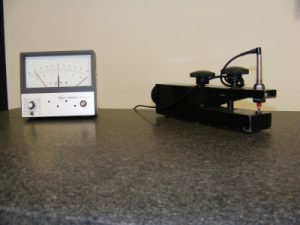
Before a surface plate has worn beyond specification for overall flatness, it will show worn or wavy posts. Monthly inspection for repeat measurement errors using a repeat reading gage will identify wear spots. A repeat reading gage is a high-precision instrument that detects local error and can be displayed on a high magnification electronic amplifier.
An effective inspection program should include regular checks with an autocollimator, providing actual calibration of overall flatness traceable to National Institute of Standards and Technology (NIST). Comprehensive calibration by the manufacturer or an independent company is necessary from time to time.
Variations Between Calibrations
In sommige gevalle is daar variasies tussen oppervlakplaatkalibrasies. Soms kan faktore soos oppervlakverandering as gevolg van slytasie, verkeerde gebruik van inspeksietoerusting of die gebruik van ongekalibreerde toerusting hierdie variasies verklaar. Die twee mees algemene faktore is egter temperatuur en ondersteuning.
One of the most important variables is temperature. For instance, the surface might have been washed with a hot or cold solution prior to calibration and not allowed sufficient time to normalize. Other causes of temperature change include drafts of cold or hot air, direct sunlight, overhead lighting or other sources of radiant heat on the surface of the plate.
There also can be variations in the vertical temperature gradient between winter and summer. In some cases, the plate is not allowed sufficient time to normalize after shipment. It is a good idea to record the vertical gradient temperature at the time the calibration is performed.
Another common cause for calibration variation is a plate that is improperly supported. A surface plate should be supported at three points, ideally located 20% of the length in from the ends of the plate. Two supports should be located 20% of the width in from the long sides, and the remaining support should be centered.
Only three points can rest solidly on anything but a precision surface. Attempting to support the plate at more than three points will cause the plate to receive its support from various combinations of three points, which will not be the same three points on which it was supported during production. This will introduce errors as the plate deflects to conform to the new support arrangement. Consider using steel stands with support beams designed to line up with the proper support points. Stands for this purpose are generally available from the surface plate manufacturer.
If the plate is properly supported, precise leveling is only necessary if an application specifies it. Leveling is not necessary to maintain the accuracy of a properly supported plate.
Extend Plate Life
Deur 'n paar riglyne te volg, sal slytasie op 'n granietoppervlakplaat verminder word en uiteindelik die lewensduur daarvan verleng word.
Eerstens is dit belangrik om die plaat skoon te hou. Luggedraagde skuurstof is gewoonlik die grootste bron van slytasie op 'n plaat, aangesien dit geneig is om in werkstukke en die kontakoppervlaktes van meters vas te sit.
It also is important to cover plates to protect it from dust and damage. Wear life can be extended by covering the plate when not in use.
Draai die plaat gereeld sodat 'n enkele area nie oormatige gebruik kry nie. Dit word ook aanbeveel om staalkontakblokkies op meetinstrumente met karbiedblokkies te vervang.
Avoid setting food or soft drinks on the plate. Many soft drinks contain either carbonic or phosphoric acid, which can dissolve the softer minerals and leave small pits in the surface.
Where to Relap
Wanneer 'n graniet-oppervlakplaat herbehandel moet word, oorweeg of hierdie diens op die perseel of by die kalibrasiefasiliteit uitgevoer moet word. Dit is altyd verkieslik om die plaat by die fabriek of 'n toegewyde fasiliteit te laat herbehandel. Indien die plaat egter nie te erg verslyt is nie, gewoonlik binne 0.001 duim van die vereiste toleransie, kan dit op die perseel herbehandel word. Indien 'n plaat tot die punt verslyt is waar dit meer as 0.001 duim buite die toleransie is, of as dit erg gekeul of gekerf is, moet dit na die fabriek gestuur word vir slyp voordat dit herbehandel word.
A calibration facility has the equipment and factory setting providing the optimum conditions for proper plate calibration and rework if necessary.
Groot sorg moet uitgeoefen word met die keuse van 'n kalibrasie- en heroppervlaktegnikus op die perseel. Vra vir akkreditasie en verifieer dat die toerusting wat die tegnikus sal gebruik, 'n naspeurbare kalibrasie het. Ervaring is ook 'n belangrike faktor, aangesien dit baie jare neem om te leer hoe om presisie-graniet korrek te lep.
Critical measurements start with a precision granite surface plate as a baseline. By ensuring a reliable reference by using a properly calibrated surface plate, manufacturers have one of the essential tools for reliable measurements and better quality parts.Q
Checklist for Calibration Variations
1. Die oppervlak is voor kalibrasie met 'n warm of koue oplossing gewas en is nie genoeg tyd gegee om te normaliseer nie.
2. Die plaat word nie behoorlik ondersteun nie.
3. Temperatuurverandering.
4. Konsepte.
5. Direkte sonlig of ander stralingshitte op die oppervlak van die plaat. Maak seker dat oorhoofse beligting nie die oppervlak verhit nie.
6. Variasies in die vertikale temperatuurgradiënt tussen winter en somer. Indien moontlik, weet die vertikale gradiënttemperatuur ten tyde van die kalibrasie.
7. Plaat kry nie genoeg tyd om te normaliseer na versending nie.
8. Onbehoorlike gebruik van inspeksietoerusting of gebruik van nie-gekalibreerde toerusting.
9. Oppervlakverandering as gevolg van slytasie.
Tech Tips
- Omdat elke lineêre meting afhang van 'n akkurate verwysingsoppervlak waaruit finale afmetings geneem word, bied oppervlakplate die beste verwysingsvlak vir werkinspeksie en uitleg voor bewerking.
- Controlling local area flatness to a tighter tolerance than overall flatness guarantees a gradual change in surface flatness profile, thereby minimizing local errors.
- 'n Doeltreffende inspeksieprogram behoort gereelde kontroles met 'n outokollimator in te sluit, wat werklike kalibrasie van algehele platheid verskaf wat na die Nasionale Inspeksie-owerheid herlei kan word.
Onder die mineraaldeeltjies waaruit graniet bestaan, is meer as 90% veldspaat en kwarts, waarvan veldspaat die meeste is. Die veldspaat is dikwels wit, grys en vleisrooi, en die kwarts is meestal kleurloos of gryswit, wat die basiese kleur van die graniet vorm. Veldspaat en kwarts is harde minerale, en dit is moeilik om met 'n staalmes te beweeg. Wat die donker kolle in die graniet betref, hoofsaaklik swart mika, is daar ook 'n paar ander minerale. Alhoewel biotiet relatief sag is, is die vermoë om stres te weerstaan nie swak nie, en terselfdertyd het hulle 'n klein hoeveelheid in graniet, dikwels minder as 10%. Dit is die materiaaltoestand waarin graniet besonder sterk is.
Nog 'n rede waarom graniet sterk is, is dat die mineraaldeeltjies styf aan mekaar gebind is en in mekaar ingebed is. Die porieë maak dikwels minder as 1% van die totale volume van die rots uit. Dit gee die graniet die vermoë om sterk druk te weerstaan en word nie maklik deur vog binnegedring nie.
Granietkomponente word van klip gemaak sonder roes-, suur- en alkali-weerstand, goeie slytasieweerstand en lang lewensduur, geen spesiale onderhoud nie. Graniet-presisiekomponente word meestal in die gereedskap van die masjineriebedryf gebruik. Daarom word hulle graniet-presisiekomponente of granietkomponente genoem. Die eienskappe van graniet-presisiekomponente is basies dieselfde as dié van granietplatforms. Inleiding tot gereedskap en meting van graniet-presisiekomponente: Presisiebewerking en mikrobewerkingstegnologie is belangrike ontwikkelingsrigtings van die masjinerievervaardigingsbedryf, en hulle het 'n belangrike aanwyser geword om 'n hoëtegnologie-vlak te meet. Die ontwikkeling van voorpunttegnologie en die verdedigingsbedryf is onafskeidbaar van presisiebewerking en mikrobewerkingstegnologie. Granietkomponente kan glad in die meting geskuif word, sonder stagnasie. Werkoppervlakmeting, algemene skrape beïnvloed nie die akkuraatheid van die meting nie. Granietkomponente moet ontwerp en vervaardig word volgens die vereistes van die vraagkant.
Toepassingsveld:
Soos ons almal weet, kies al hoe meer masjiene en toerusting presisie-granietkomponente.
Granietkomponente word gebruik vir dinamiese beweging, lineêre motors, CMM, CNC, lasermasjiene...
welkom om ons te kontak vir meer inligting.
Granietmeetinstrumente en granietmeganiese komponente word van hoë kwaliteit Jinan Black-graniet gemaak. As gevolg van hul hoë presisie, lang duursaamheid, goeie stabiliteit en korrosieweerstand, word hulle al hoe meer gebruik in produkinspeksie van die moderne nywerheid en wetenskaplike gebiede soos meganiese lugvaart en wetenskaplike navorsing.
Voordele
----Twee keer so hard soos gietyster;
----Minimale veranderinge in dimensie is te wyte aan temperatuurveranderinge;
----Vry van wringing, so daar is geen onderbreking van werk nie;
----Vry van brame of uitsteeksels as gevolg van die fyn korrelstruktuur en onbeduidende kleefkrag, wat die hoë mate van platheid oor 'n lang lewensduur verseker en geen skade aan ander onderdele of instrumente veroorsaak nie;
---- Probleemvrye werking vir gebruik met magnetiese materiale;
----Lang lewensduur en roesvry, wat lei tot lae onderhoudskoste.
Die presisie-graniet-oppervlakplate word met presisie tot 'n hoë standaard van platheid oorvleuel om akkuraatheid te behaal en word as basis gebruik vir die montering van gesofistikeerde meganiese, elektroniese en optiese meetstelsels.
Van die unieke kenmerke van die granietoppervlakplaat:
Eenvormigheid in Hardheid;
Akkurate onderladingstoestande;
Vibrasie-absorberend;
Maklik om skoon te maak;
Wikkelbestand;
Lae porositeit;
Nie-skuurend;
Nie-magneties
Voordele van granietoppervlakplaat
First, the rock after a long period of natural aging, uniform structure, coefficient minimum, the internal stress completely disappear, not deformed, so the precision is high.
Stuur e-pos
Skype
Engels
Duits
Frans
Portugees
Spaans
Japannees
Koreaans
Arabies
Iers
Grieks
Turks
Italiaans
Deens
Roemeens
Indonesies
Tsjeggies
Sweeds
Pools
Baskies
Katalaans
Esperanto
Hindi
Lao
Albanees
Amharies
Armeens
Azerbeidjans
Belarussiese
PBengaals
Bosnies
Bulgaars
Cebuano
Chichewa
Korsikaans
Kroaties
Nederlands
Estnies
Filippyns
Fins
Fries
Galisies
Georgies
Goedjarati
Haïtiaans
Hausa
HawaiiaansHebreeusHmong
HongaarsYslandsIgbo
JavaansKannada
Kazakse
Khmer
Koerdies
Kirgisies
Latyn
Lets
Litaus
Luxemburg..
Masedonies
Malgassies
Maleis
Malayalam
Maltees
Maori
Marathi
Mongools
Birmaans
Nepalees
Noors
Pasjtoe
Persies
Punjabi
Serwies
Sesotho
Singalees
Slowaaks
- Sloweens
- Somalies
- Samoaans
- Skots-Gaelies
- Sjona
- Sindhi
- Sundanees
- Swahili
- Tadjik
- Tamil
- Telugu
Thai
Oekraïens
OerdoeAOezbeeks2ViëtnameesLWalliesAXhosa
Jiddisj
Yoruba
Zoeloe
Kinyarwanda
Tataars
Turkmeens
Oeigoer
Chinees
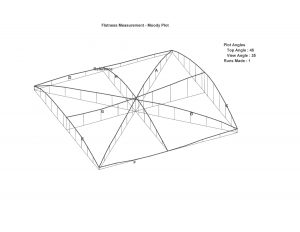
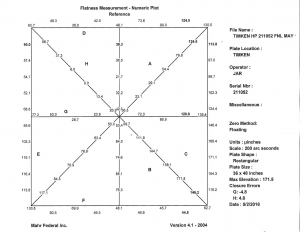
Routine surface plate calibration is necessary to ensure flatness and repeatability over time. The precision measurement group at Cross is ISO 17025 accredited for calibration of surface plate flatness and repeatability. We utilize the Mahr Surface Plate Certification System featuring:
- Moody and Profile Analysis,
- Isometric or Numeric plots,
- Multiple Run Average, and
- Automatic Grading According to Industry Standards.
The Mahr Computer Assisted Model determines any angular or linear deviation from absolute level, and is ideally suited for highly precise profiling of surface plates.
Intervals between calibrations will vary depending on the frequency of use, the environmental conditions where the plate is located, and the specific quality requirements of your company. Properly maintaining your surface plate may allow for longer intervals between each calibration, helps you avoid the added cost of relapping, and most importantly ensures the measurements you obtain on the plate are as accurate as possible. Although surface plates appear robust, they are precision instruments and should be treated as such. Here are some things to consider regarding care of your surface plates:
- Keep the plate clean, and if possible cover it when it is not in use
- Nothing should be placed on the plate other than gages or pieces to be measured.
- Don’t use the same spot on the plate every time.
- If possible, rotate the plate periodically.
- Respect the load limit of your plate
Precision Granite Base Can Improve Machine Tool Performances
Requirements are constantly increasing in mechanical engineering in general and in machine tool construction in particular. Achieving maximum precision and performance values without increasing costs are constant challenges to being competitive. The machine tool bed is a decisive factor here. Therefore, more and more machine tool manufacturers are relying on granite. Due to its physical parameters, it offers clear advantages that cannot be achieved with steel or polymer concrete.
Granite is a so-called volcanic deep rock and has a very dense and homogeneous structure with an extremely low coefficient of expansion, low thermal conductivity and high vibration damping.
Below you will discover why the common opinion that granite is mainly only suitable as machine base for high-end coordinate measuring machines is long outdated and why this natural material as a machine tool base is a very advantageous alternative to steel or cast iron even for high-precision machine tools.
We can manufacture granite components for dynamic motion, granite components for linear motors, granite components for ndt, granite components for xray, granite components for cmm, granite components for cnc, granite precision for laser, granite components for aerospace, granite components for precision stages...
High Added Value Without Additional Costs
The increasing use of granite in mechanical engineering is not so much due to the massive increase in the price of steel. Rather, it is because the added value for the machine tool achieved with a machine bed made of granite is possible at very little or no extra cost. This is proven by cost comparisons of well-known machine tool manufacturers in Germany and Europe.
The considerable gain in thermodynamic stability, vibration damping and long-term precision made possible by granite cannot be achieved with a cast iron or steel bed, or only at relatively high cost. For example, thermal errors can account for up to 75% of the total error of a machine, with compensation often attempted for by software – with moderate success. Due to its low thermal conductivity, granite is the better foundation for long-term precision.
With a tolerance of 1 μm, granite easily meets the flatness requirements according to DIN 876 for the degree of accuracy 00. With a value of 6 on the hardness scale 1 to 10, it is extremely hard, and with its specific weight of 2.8g/cm³ it almost reaches the value of aluminium. This also results in additional advantages such as higher feed rates, higher axis accelerations and an extension of the tool life for cutting machine tools. Thus, the change from a cast bed to a granite machine bed moves the machine tool in question into the high-end class in terms of precision and performance – at no extra cost.
Granite’s Improved Ecological Footprint
In contrast to materials such as steel or cast iron, natural stone does not have to be produced with a great deal of energy and using additives. Only relatively small amounts of energy are required for quarrying and surface treatment. This results in a superior ecological footprint, which even at the end of a machine’s life surpasses that of steel as a material. The granite bed can be the basis for a new machine or be used for completely different purposes such as shredding for road construction.
Nor are there any shortages of resources for granite. It is a deep rock formed from magma within the earth’s crust. It has ‘matured’ for millions of years and is available in very large quantities as a natural resource on almost all continents, including all of Europe.
Conclusion: The numerous demonstrable advantages of granite compared to steel or cast iron justify the increasing willingness of mechanical engineers to use this natural material as a foundation for high-precision, high-performance machine tools. Detailed information about granite properties, which are advantageous for machine tools and mechanical engineering, can be found in this further article.
A repeat measurement is a measurement of local flatness areas. The Repeat Measurement specification states that a measurement taken anywhere on the surface of a plate will repeat within the stated tolerance. Controlling local area flatness tighter than overall flatness guarantees a gradual change in surface flatness profile thereby minimizing local errors.
Most manufacturers, including imported brands, adhere to the Federal Specification of overall flatness tolerances but many overlook the repeat measurements. Many of the low value or budget plates available in the market today will not guarantee repeat measurements. A manufacturer who does not guarantee repeat measurements is NOT producing plates that meet the requirements of ASME B89.3.7-2013 or Federal Specification GGG-P-463c, or DIN 876, GB, JJS...
Both are critical to ensure a precision surface for accurate measurements. Flatness specification alone is not sufficient to guarantee measurement accuracy. Take as an example, a 36 X 48 Inspection Grade A surface plate, which meets ONLY the flatness specification of .000300". If the piece being checked bridges several peaks, and the gage being used is in a low spot, the measurement error could be the full tolerance in one area, 000300"! Actually, it can be much higher if the gage is resting on the slope of an incline.
Errors of .000600"-.000800" are possible, depending upon the severity of the slope, and the arm length of the gage being used. If this plate had a Repeat Measurement specification of .000050"F.I.R. then the measurement error would be less than .000050" regardless of where the measurement is taken on the plate. Another problem, which usually arises when an untrained technician attempts to resurface a plate on-site, is the use of Repeat Measurements alone to certify a plate.
The instruments that are used to verify repeatability are NOT designed to check overall flatness. When set to zero on a perfectly curved surface, they will continue to read zero, whether that surface is perfectly flat or perfectly concave or convex 1/2"! They simply verify the uniformity of the surface, not the flatness. Only a plate that meets both the flatness specification AND the repeat measurement specification truly meets the requirements of ASME B89.3.7-2013 or Federal Specification GGG-P-463c.
Ask us about or flatness specification and repeat measurement promise by calling +86 19969991659 or emailing INFO@ZHHIMG.COM
Yes, but they can only be guaranteed for a specific vertical temperature gradient. The effects of thermal expansion on the plate could easily cause a change in accuracy greater than the tolerance if there is a change in the gradient. In some cases, if the tolerance is tight enough, the heat absorbed from overhead lighting can cause enough of a gradient change over several hours.
Granite has a coefficient of thermal expansion of approximately .0000035 inches per inch per 1°F. As an example: A 36" x 48" x 8" surface plate has an accuracy of .000075" (1/2 of Grade AA) at a gradient of 0°F, the top and bottom are the same temperature. If the top of the plate warms up to the point where it is 1°F warmer than the bottom, the accuracy would change to .000275" convex ! Therefore, ordering a plate with a tolerance tighter than Laboratory Grade AA should only be considered if there is adequate climate control.
A surface plate should be supported at 3 points, ideally located 20% of the length in from the ends of the plate. Two supports should be located 20% of the width in from the long sides, and the remaining support should be centered. Only 3 points can rest solidly on anything but a precision surface.
The plate should be supported at these points during production, and it should be supported only at these three points while in use. Attempting to support the plate at more than three points will cause the plate to receive its support from various combinations of three points, which will not be the same 3 points on which it was supported during production. This will introduce errors as the plate deflects to conform to the new support arrangement. All zhhimg steel stands have support beams designed to line up with the proper support points.
If the plate is properly supported, precise leveling is only necessary if your application calls for it. Leveling is not necessary to maintain the accuracy of a properly supported plate.
Why Choose Granite for Machine Bases and Metrology Components?
The answer is 'yes' for almost every application. The advantages of granite include: No rust or corrosion, almost immune to warping, no compensating hump when nicked, longer wear life, smoother action, greater precision, virtually non-magnetic, low co-efficient of thermal expansion, and low maintenance cost.
Granite is a type of igneous rock quarried for its extreme strength, density, durability, and resistance to corrosion. But granite is also very versatile– it’s not just for squares and rectangles! In fact, Starrett Tru-Stone confidently works with granite components engineered in shapes, angles, and curves of all variations on a regular basis—with excellent outcomes.
Through our state of the art processing, cut surfaces can be exceptionally flat. These qualities make granite the ideal material to create custom-size and custom-design machine bases and metrology components. Granite is:
machineable
precisely flat when cut and finished
rust resistant
durable
long lasting
Granite components are also easy to clean. When creating custom designs, be sure to choose granite for its superior benefits.
STANDARDS / HIGH WEAR APPLICATIONS
The granite utilized by ZhongHui for our standard surface plate products has high quartz content, which provides greater resistance to wear and damage. Our Superior Black and Crystal Pink colors have low water absorption rates, minimizing the possibility of your precision gages rusting while setting on the plates. The colors of granite offered by ZhongHui result in less glare, which means less eyestrain for individuals using the plates. We have chosen our granite types while considering thermal expansion in an effort to keep this aspect minimal.
CUSTOM APPLICATIONS
When your application calls for a plate with custom shapes, threaded inserts, slots or other machining, you’ll want to select a material like Black Diabase. This natural material offers superior stiffness, excellent vibration dampening, and improved machinability.
Yes, if they are not too badly worn. Our factory setting and equipment allow the optimum conditions for proper plate calibration and rework if necessary. Generally, if a plate is within .001" of the required tolerance, it can be resurfaced on-site. If a plate is worn to the point where it is more than .001" out of tolerance, or if it is badly pitted or nicked, then it will need to be sent to the factory for grinding prior to relapping.
Great care should be exercised in selecting an on-site calibration and resurfacing technician. We urge you to use caution in selecting your calibration service. Ask for accreditation and verify the equipment that the technician will use has a National Inspection Institution traceable calibration. It takes many years to learn how to properly lap precision granite.
ZhongHui provides quick turn-around on calibrations performed in our factory. Send your plates in for calibration if possible. Your quality and reputation depend on the accuracy of your measurement instruments including surface plates!
Our black surface plates have a significantly higher density and are up to three times as stiff. Therefore, a plate made of the black does not need to be as thick as a granite plate of the same size to have equal or greater resistance to deflection. Reduced thickness means less weight and lower shipping costs.
Beware of others who use lower quality black granite in the same thickness. As stated above, properties of granite, like wood or metal, vary by material and color, and is not an accurate predictor of stiffness, hardness, or wear resistance. In fact, many types of black granite and diabase are very soft and not suitable for surface plate applications.
No. The specialized equipment and training necessary to rework these items requires that they be returned to the factory for calibration and rework.
Yes. Ceramic and granite have similar characteristics, and the methods used to calibrate and lap granite can be used with ceramic items as well. Ceramics are more difficult to lap than granite resulting in a higher cost.
Yes, provided that the inserts are recessed below the surface. If steel inserts are flush with, or above the surface plane, they must be spot-faced down before the plate can be lapped. If required, we can provide that service.
Yes. Steel inserts with the desired thread (English or metric) can be epoxy bonded into the plate at the desired locations. ZhongHui uses CNC machines to provide the tightest insert locations within +/- 0.005”. For less critical inserts, our locational tolerance for threaded inserts is ±.060". Other options include steel T-Bars and dovetail slots machined directly into the granite.
Inserts that are properly bonded using high strength epoxy and good workmanship will withstand a great deal of torsional and shear force. In a recent test, using 3/8"-16 threaded inserts, an independent testing laboratory measured the force required to pull an epoxy-bonded insert from a surface plate. Ten plates were tested. Out of these ten, in nine cases, the granite fractured first. The average load at the point of failure was 10,020 lbs. for gray granite and 12,310 lbs. for black. In the single case where an insert pulled free of the plate, the load at the point of failure was 12,990 lbs.! If a work piece forms a bridge across the insert and extreme torque is applied, it is possible to generate enough force to fracture the granite. Partially for this reason, ZhongHui gives guidelines for the maximum safe torque that can be applied the epoxy bonded inserts: https://www.zhhimg.com/standard-thread-inserts-product/
Yes, but only at our factory. At our plant, we can restore almost any plate to 'like-new' condition, usually for less than half the cost of replacing it. Damaged edges can be cosmetically patched, deep grooves, nicks, and pits can be ground out, and the attached supports can be replaced. In addition, we can modify your plate to increase its versatility by adding solid or threaded steel inserts and cutting slots or clamping lips, per your specifications.
Why Choose Granite?
Granite is a type of igneous rock formed in the Earth millions of years ago. The composition of igneous rock contained many minerals such as quartz that is extremely hard and wear-resistant. In addition to hardness and wear resistance granite has approximately half the coefficient of expansion as cast iron. As its volumetric weight is approximately one third that of cast iron, granite is easier to manoeuvre.
For machine bases and metrology components, black granite is the colour most used. Black granite has a higher percentage of quartz than other colours and is, therefore, the hardest wearing.
Granite is cost-effective, and cut surfaces can be exceptionally flat. Not only can it be hand lapped to achieve extremes of accuracy, but re-conditioning can be performed without moving the plate or table off-site. It is entirely a hand lapping operation and generally costs much less than re-conditioning a cast iron alternative.
These qualities make granite the ideal material to create custom-size and custom-design machine bases and metrology components such as the granite surface plate.
ZhongHui produces bespoke granite products that are created to support specific measurement requirements. These bespoke items vary from straight edges to tri squares. Due to the versatile nature of granite, the components can be produced to any size required; they are hard wearing and long-lasting.
Advantages of Granite Surface Plates
The importance of measuring on an even surface was established by British inventor Henry Maudsley in the 1800s. As a machine tool innovator, he determined that consistent production of parts required a solid surface for reliable measurements.
The industrial revolution created a demand for measuring surfaces, so engineering company Crown Windley created manufacturing standards. The standards for surface plates were first set by Crown in 1904 using metal. As the demand and cost for metal increased, alternative materials for the measuring surface were investigated.
In America, monument creator Wallace Herman established that black granite was an excellent surface plate material alternative to metal. As granite is non-magnetic and doesn’t rust, it soon became the preferred measuring surface.
A granite surface plate is an essential investment for laboratories and test facilities. A granite surface plate of 600 x 600 mm can be mounted on a support stand. The stands provide a working height of 34” (0.86m) with five adjustable points for levelling.
For reliable and consistent measurement results, a granite surface plate is crucial. As the surface is a smooth and stable plane, it enables instruments to be carefully manipulated.
The main advantages of granite surface plates are:
• Non-reflective
• Resistant to chemicals and corrosion
• Low coefficient of expansion compared with cart iron so less affected by temperature change
• Naturally rigid and hard-wearing
• The plane of the surface is unaffected if scratched
• Will not rust
• Non-magnetic
• Easy to clean and maintain
• Calibration and resurfacing can be done onsite
• Suitable for drilling for threaded support inserts
• High vibration damping
For many shops, inspection rooms and laboratories, precision granite surface plates are relied on as the basis for accurate measurement. Because every linear measurement depends on an accurate reference surface from which final dimensions are taken, surface plates provide the best reference plane for work inspection and layout prior to machining. They also are ideal bases for making height measurements and gaging surfaces. Further, a high degree of flatness, stability, overall quality and workmanship make them a good choice for mounting sophisticated mechanical, electronic and optical gaging systems. For any of these measurement processes, it is imperative to keep surface plates calibrated.
Repeat Measurements and Flatness
Both flatness and repeat measurements are critical to ensure a precision surface. Flatness can be considered as all points on the surface being contained within two parallel planes, the base plane and the roof plane. The measurement of distance between the planes is the overall flatness of the surface. This flatness measurement commonly carries a tolerance and may include a grade designation.
The flatness tolerances for three standard grades are defined in the federal specification as determined by the following formula:
Laboratory Grade AA = (40 + diagonal² / 25) x 0.000001 inch (unilateral)
Inspection Grade A = Laboratory Grade AA x 2
Tool Room Grade B = Laboratory Grade AA x 4
In addition to flatness, repeatability must be ensured. A repeat measurement is a measurement of local flatness areas. It is a measurement taken anywhere on the surface of a plate that will repeat within the stated tolerance. Controlling local area flatness to a tighter tolerance than overall flatness guarantees a gradual change in surface flatness profile, thereby minimizing local errors.
To ensure a surface plate meets both the flatness and repeat measurement specifications, manufacturers of granite surface plates should use Federal Specification GGG-P-463c as a basis for their specifications. This standard addresses repeat measurement accuracy, material properties of surface plate granites, surface finish, support point location, stiffness, acceptable methods of inspection and installation of threaded inserts.
Before a surface plate has worn beyond specification for overall flatness, it will show worn or wavy posts. Monthly inspection for repeat measurement errors using a repeat reading gage will identify wear spots. A repeat reading gage is a high-precision instrument that detects local error and can be displayed on a high magnification electronic amplifier.
Checking Plate Accuracy
By following a few simple guidelines, an investment in a granite surface plate should last for many years. Depending on plate usage, shop environment and required accuracy, frequency of checking the surface plate accuracy varies. A general rule of thumb is for a new plate to receive a full recalibration within one year of purchase. If the plate is used frequently, it is advisable to shorten this interval to six months.
Before a surface plate has worn beyond specification for overall flatness, it will show worn or wavy posts. Monthly inspection for repeat measurement errors using a repeat reading gage will identify wear spots. A repeat reading gage is a high-precision instrument that detects local error and can be displayed on a high magnification electronic amplifier.
An effective inspection program should include regular checks with an autocollimator, providing actual calibration of overall flatness traceable to National Institute of Standards and Technology (NIST). Comprehensive calibration by the manufacturer or an independent company is necessary from time to time.
Variations Between Calibrations
In some cases, there are variations between surface plate calibrations. Sometimes factors such as surface change resulting from wear, incorrect use of inspection equipment or use of noncalibrated equipment can account for these variations. The two most common factors, however, are temperature and support.
One of the most important variables is temperature. For instance, the surface might have been washed with a hot or cold solution prior to calibration and not allowed sufficient time to normalize. Other causes of temperature change include drafts of cold or hot air, direct sunlight, overhead lighting or other sources of radiant heat on the surface of the plate.
There also can be variations in the vertical temperature gradient between winter and summer. In some cases, the plate is not allowed sufficient time to normalize after shipment. It is a good idea to record the vertical gradient temperature at the time the calibration is performed.
Another common cause for calibration variation is a plate that is improperly supported. A surface plate should be supported at three points, ideally located 20% of the length in from the ends of the plate. Two supports should be located 20% of the width in from the long sides, and the remaining support should be centered.
Only three points can rest solidly on anything but a precision surface. Attempting to support the plate at more than three points will cause the plate to receive its support from various combinations of three points, which will not be the same three points on which it was supported during production. This will introduce errors as the plate deflects to conform to the new support arrangement. Consider using steel stands with support beams designed to line up with the proper support points. Stands for this purpose are generally available from the surface plate manufacturer.
If the plate is properly supported, precise leveling is only necessary if an application specifies it. Leveling is not necessary to maintain the accuracy of a properly supported plate.
It is important to keep the plate clean. Airborne abrasive dust is usually the greatest source of wear and tear on a plate, as it tends to embed in workpieces and the contact surfaces of gages. Cover plates to protect them from dust and damage. Wear life can be extended by covering the plate when not in use.
Extend Plate Life
Following a few guidelines will reduce wear on a granite surface plate and ultimately, extend its life.
First, it is important to keep the plate clean. Airborne abrasive dust is usually the greatest source of wear and tear on a plate, as it tends to embed in workpieces and the contact surfaces of gages.
It also is important to cover plates to protect it from dust and damage. Wear life can be extended by covering the plate when not in use.
Rotate the plate periodically so that a single area does not receive excessive use. Also, it is recommended to replace steel contact pads on gaging with carbide pads.
Avoid setting food or soft drinks on the plate. Many soft drinks contain either carbonic or phosphoric acid, which can dissolve the softer minerals and leave small pits in the surface.
Where to Relap
When a granite surface plate needs re-surfacing, consider whether to have this service performed on-site or at the calibration facility. It is always preferable to have the plate relapped at the factory or a dedicated facility. If, however, the plate is not too badly worn, generally within 0.001 inch of the required tolerance, it can be resurfaced on-site. If a plate is worn to the point where it is more than 0.001 inch out of tolerance, or if it is badly pitted or nicked, then it should be sent to the factory for grinding prior to relapping.
A calibration facility has the equipment and factory setting providing the optimum conditions for proper plate calibration and rework if necessary.
Great care should be exercised in selecting an on-site calibration and resurfacing technician. Ask for accreditation and verify the equipment that the technician will use has a NIST-traceable calibration. Experience also is an important factor, as it takes many years to learn how to correctly lap precision granite.
Critical measurements start with a precision granite surface plate as a baseline. By ensuring a reliable reference by using a properly calibrated surface plate, manufacturers have one of the essential tools for reliable measurements and better quality parts.
Checklist for Calibration Variations
- The surface was washed with a hot or cold solution prior to calibration and was not allowed sufficient time to normalize.
- The plate is improperly supported.
- Temperature change.
- Drafts.
- Direct sunlight or other radiant heat on the surface of the plate. Be sure that overhead lighting is not heating the surface.
- Variations in the vertical temperature gradient between winter and summer. If at all possible, know the vertical gradient temperature at the time the calibration is performed.
- Plate not allowed sufficient time to normalize after shipment.
- Improper use of inspection equipment or use of noncalibrated equipment.
- Surface change resulting from wear.
Tech Tips
Because every linear measurement depends on an accurate reference surface from which final dimensions are taken, surface plates provide the best reference plane for work inspection and layout prior to machining.
Controlling local area flatness to a tighter tolerance than overall flatness guarantees a gradual change in surface flatness profile, thereby minimizing local errors.